The Fort That Changed Everything
Ethan Allen did not wait for permission. He took the fort, invoked the authority afterward, and sent cannons three hundred miles through winter to end the siege of Boston. That is what formed men do.

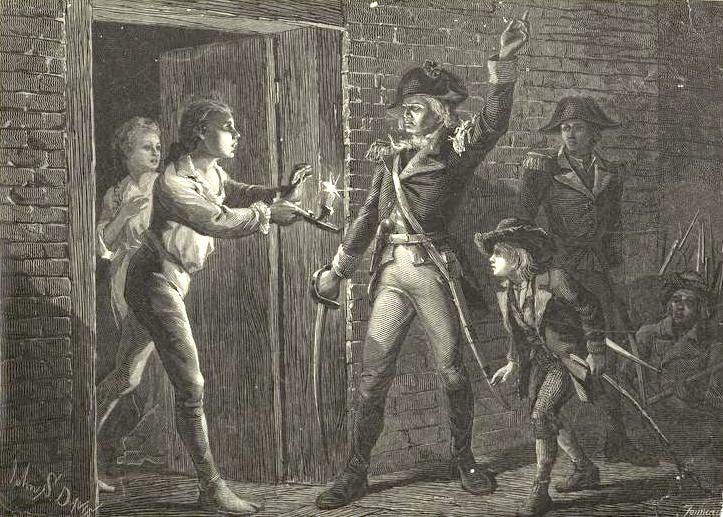
In the early morning hours of May 10, 1775, Ethan Allen stood at the gate of Fort Ticonderoga with eighty-three men.
The fort sat at the southern tip of Lake Champlain, commanding the water route between Canada and the American colonies. It was one of the most strategically significant positions in North America. The British garrison inside was undermanned and unprepared. The commander, Captain William Delaplace, was asleep.
Allen’s men had crossed the lake in the dark. They had no artillery. They had surprise, numbers, and the conviction that what they were about to do needed to be done.
Allen led the charge through the gate. He reached the door of the commander’s quarters and demanded the surrender of the fort.
Delaplace appeared at the door, confused, still pulling on his trousers.
Allen’s response has been recorded in several versions. The version history has settled on is this:
In the name of the Great Jehovah and the Continental Congress.
The fort surrendered without a shot.
It was May 10, 1775. The Battle of Lexington and Concord had been fought twenty-one days earlier. The Continental Congress had convened in Philadelphia that same morning. The war was three weeks old.
Ethan Allen had just changed it.
Who Ethan Allen actually was.
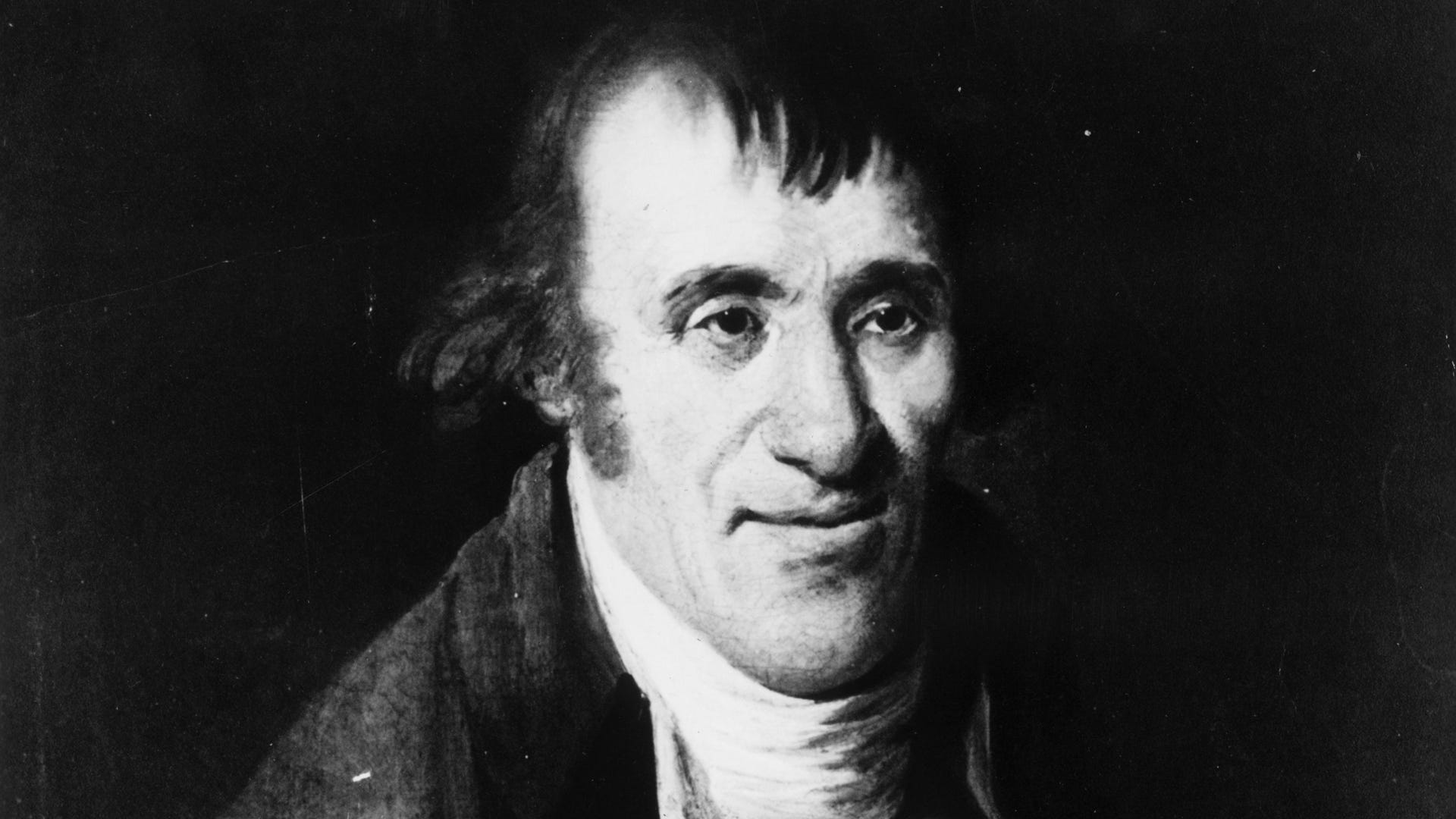
The folk hero version of Ethan Allen is a brawler. A frontiersman. A man of outsized physical presence and outsized personality who led a band of irregulars and took a fort with a memorable line.
That version is not wrong. It is incomplete.
Allen was born in Connecticut in 1738. He had almost no formal education but spent his adult life reading voraciously in natural philosophy, theology, and political theory. He was a serious thinker in an era of serious thinkers, a man who engaged the intellectual tradition of his time with the same aggression he brought to everything else.
In 1785 he published a book called Reason: The Only Oracle of Man. It was the first book-length philosophical work published in the United States after independence. It argued for deism and natural reason as the foundation of human understanding. Thomas Jefferson read it. It was controversial. It was also the product of a man who had been reading and thinking for decades before he ever crossed Lake Champlain in the dark.
The Green Mountain Boys were not soldiers. They were land rights fighters.
Vermont, which was not yet a state and would not become one until 1791, was contested territory between New York and New Hampshire. The settlers who had moved there under New Hampshire grants found their titles challenged by New York, which claimed the territory and sent surveyors and sheriffs to enforce that claim. Ethan Allen organized the resistance. The Green Mountain Boys were formed in that resistance. Years of fighting for their land against an authority they considered illegitimate had built them into exactly the kind of men who could cross a lake before dawn and take a fort without firing a shot.
They were not performing courage at Ticonderoga. They were expressing a habit.
Why the fort mattered beyond the surrender.
The immediate military value of Fort Ticonderoga was the cannons.
The fort held approximately sixty usable artillery pieces including mortars, howitzers, and iron and brass cannons. In May 1775 the Continental Army, which did not yet officially exist, had almost no artillery. The siege of Boston had no cannon. The colonial forces surrounding the city could prevent the British from moving out but could not force them to leave.
The cannons at Ticonderoga could change that.
The question was how to get them there. The fort was located in what is now upstate New York. Boston was in Massachusetts. Between them were the Green Mountains of Vermont, the Connecticut River valley, and three hundred miles of winter terrain with no roads capable of handling heavy artillery.
Henry Knox solved the problem.
Knox was twenty-five years old. He had been a bookseller in Boston before the war. He had educated himself in military history and engineering by reading every book on the subject he could find in his shop, which was a great many. Washington appointed him to retrieve the Ticonderoga cannons in November 1775.
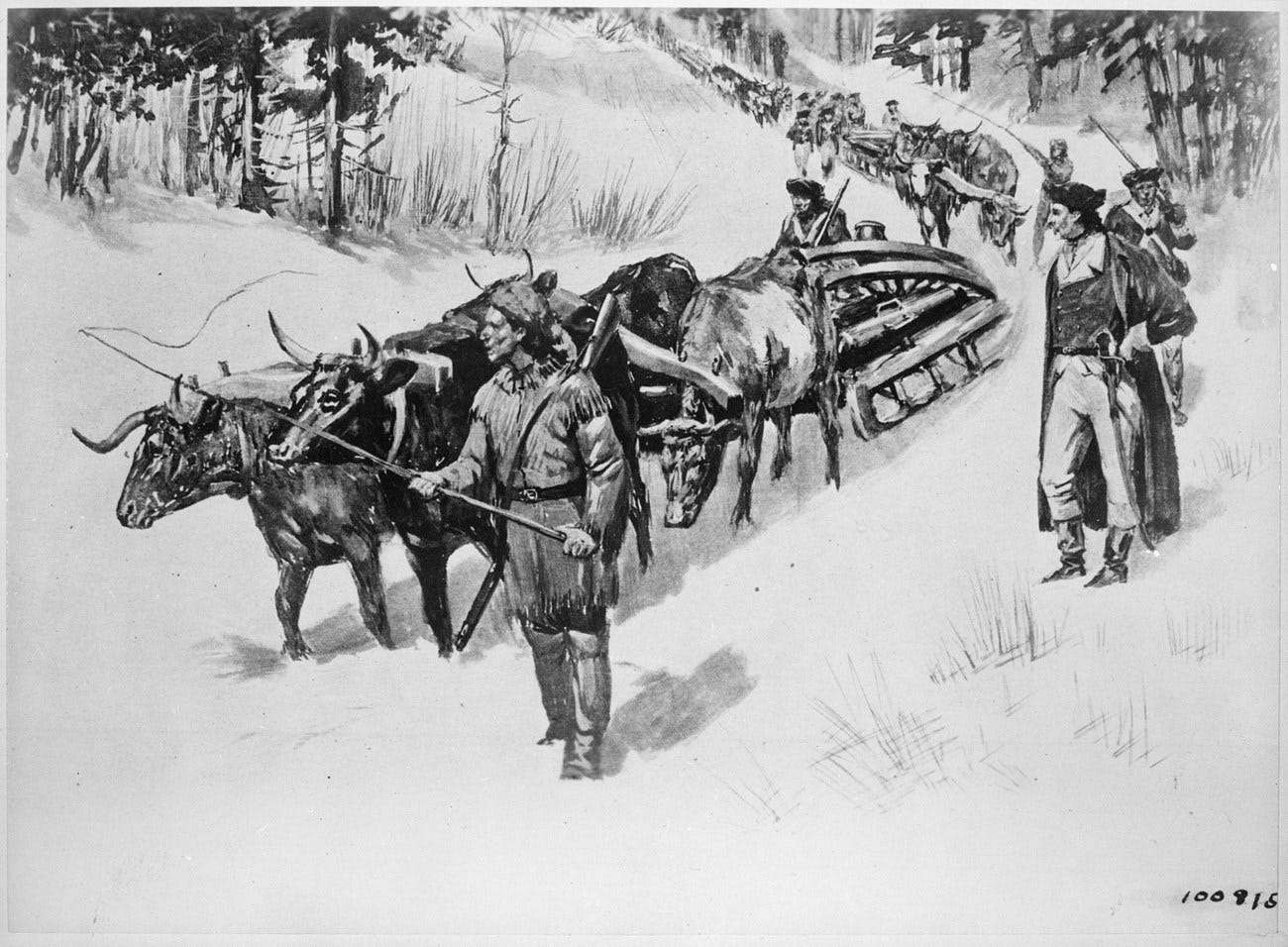
What Knox accomplished between November 1775 and January 1776 is one of the most extraordinary feats of the entire war. He built or requisitioned forty-two sleds. He used oxen and horses to drag the cannons across the frozen Lake George. He hauled them over the Berkshire Mountains in the dead of winter. He managed the logistics of moving nearly sixty tons of iron and bronze across three hundred miles of terrain that had never been designed for the purpose.
On January 27, 1776, Knox arrived in Cambridge with the cannons.
Washington had them placed on Dorchester Heights, the high ground overlooking Boston Harbor, on the night of March 4th. When the British woke on the morning of March 5th and saw the fortifications above them, General Howe reportedly said that the rebels had done more in one night than his whole army could do in months.
On March 17, 1776, the British evacuated Boston. They never returned.
The siege that had begun the morning after Lexington and Concord, the improvised blockade of farmers and tradesmen that had stunned the British generals, ended because a twenty-five-year-old former bookseller dragged cannons three hundred miles through winter on homemade sleds.
Those cannons had been sitting in Fort Ticonderoga for years. They became decisive only because Ethan Allen decided, without authorization, to take them.
The authorization problem.
This is the detail that most histories gloss over and that matters most for the argument of this platform.
When Ethan Allen crossed Lake Champlain on the night of May 9th, 1775, he had no authorization from the Continental Congress. The Congress had not yet fully convened. It had certainly not ordered the seizure of a British fort. Allen was acting on his own judgment, with men he had organized himself, under no legal authority that any recognized government had granted him.
He invoked the Continental Congress in his surrender demand not because they had sent him but because invoking them gave the action legitimacy after the fact. He was a formed man who saw what the situation required, acted on that judgment, and trusted that the authority he needed would ratify what he had done.
It did. Congress formally authorized the retention of Ticonderoga within weeks.
This is the pattern you have seen in every essay in this series.
Parker at Lexington Green. Buttrick at North Bridge. The Provincial Congress organizing 13,600 men with no legal standing. The siege of Boston that no general ordered. Allen at Ticonderoga. Washington accepting command with no guarantee of success.
Formed men looking at what the situation required and acting without waiting for permission.
Not recklessness. Not insubordination. The exercise of a judgment trained by decades of self-governance to recognize what the moment demanded and to move toward it without hesitation.
The town meeting had built that capacity. The militia had built it. The church covenant had built it. The apprenticeship had built it. The household had built it.
Formation produces men who do not need to be told what to do.
What the morning of May 10th produced.
The seizure of Fort Ticonderoga did four things that shaped the rest of the war.
It provided the artillery that ended the siege of Boston and drove the British out of the city they had held since before the war began.
It secured the northern approach to the colonies and denied the British the use of the Lake Champlain corridor for more than a year.
It demonstrated to the Continental Congress, which convened that same day in Philadelphia, that the colonies were capable of offensive military action, not merely defensive resistance. That demonstration mattered for what Congress was willing to authorize and fund in the months that followed.
And it showed, as Lexington and Concord had shown three weeks earlier, that formed men acting on their own judgment could accomplish what no professional army had been sent to accomplish.
Allen did not have orders. He had formation.
That was enough.
The line that runs forward.
Ethan Allen crossed a lake in the dark with eighty-three men because he understood that the situation required it and no one else was coming to do it.
He had been formed for that moment across years of fighting for his land, reading in natural philosophy and political theory, and leading men who had been hardened by the same struggle.
The formation came before the fort.
Your son is being formed right now. Not for a lake crossing in the dark. For the moments in his life where the situation will require action and no one above him will tell him what to do. Where his judgment will be the only thing standing between what is necessary and what is left undone.
Allen did not hesitate at the gate of Fort Ticonderoga because he had been formed to know what hesitation costs.
That formation is yours to give. It does not come from a school. It does not come from an institution.
It comes from a father who has done the work of building a man who knows what the moment requires and moves toward it.
Get to work.
Value for Value
251 years ago this week, a formed man crossed a lake in the dark and changed the course of a war.
If this essay gave you something worth having, give something back.
Send it to one father who needs to read it. Post it. Pass the argument forward. That is how the transmission works.
The book behind this essay is Forge the Son. The formation manual for fathers who are building sons who will not need to be told what to do.
Order on Amazon: https://a.co/d/0ezYbsTX
If you want to sustain this work through July 4 and beyond, become a paid subscriber. Every essay in this series is one argument built piece by piece toward the 250th anniversary of the Declaration.
The republic is rebuilt one household at a time.
Start yours.
~ Brett Hahn, AmRev Resurrected 🇺🇸
Brett Hahn is the founder of AmRev Resurrected and the author of Forge the Son: A Father’s Manual for Raising Sons by the Spirit That Built America.
Paperback: https://a.co/d/0ezYbsTX Kindle: https://a.co/d/05b5zdEL
amrevresurrected.substack.com | @AmRevResurrect | amrevresurrected.com
Sonnet 4.6
So good Brett! Another fantastic installment as we head toward our 250th. I particularly enjoyed this section…
Not recklessness. Not insubordination. The exercise of a judgment trained by decades of self-governance to recognize what the moment demanded and to move toward it without hesitation.
The town meeting had built that capacity. The militia had built it. The church covenant had built it. The apprenticeship had built it. The household had built it.
Formation produces men who do not need to be told what to do.
Well done Brother! Thanks for writing… keep em’ coming! 🙏🏼🇺🇸